
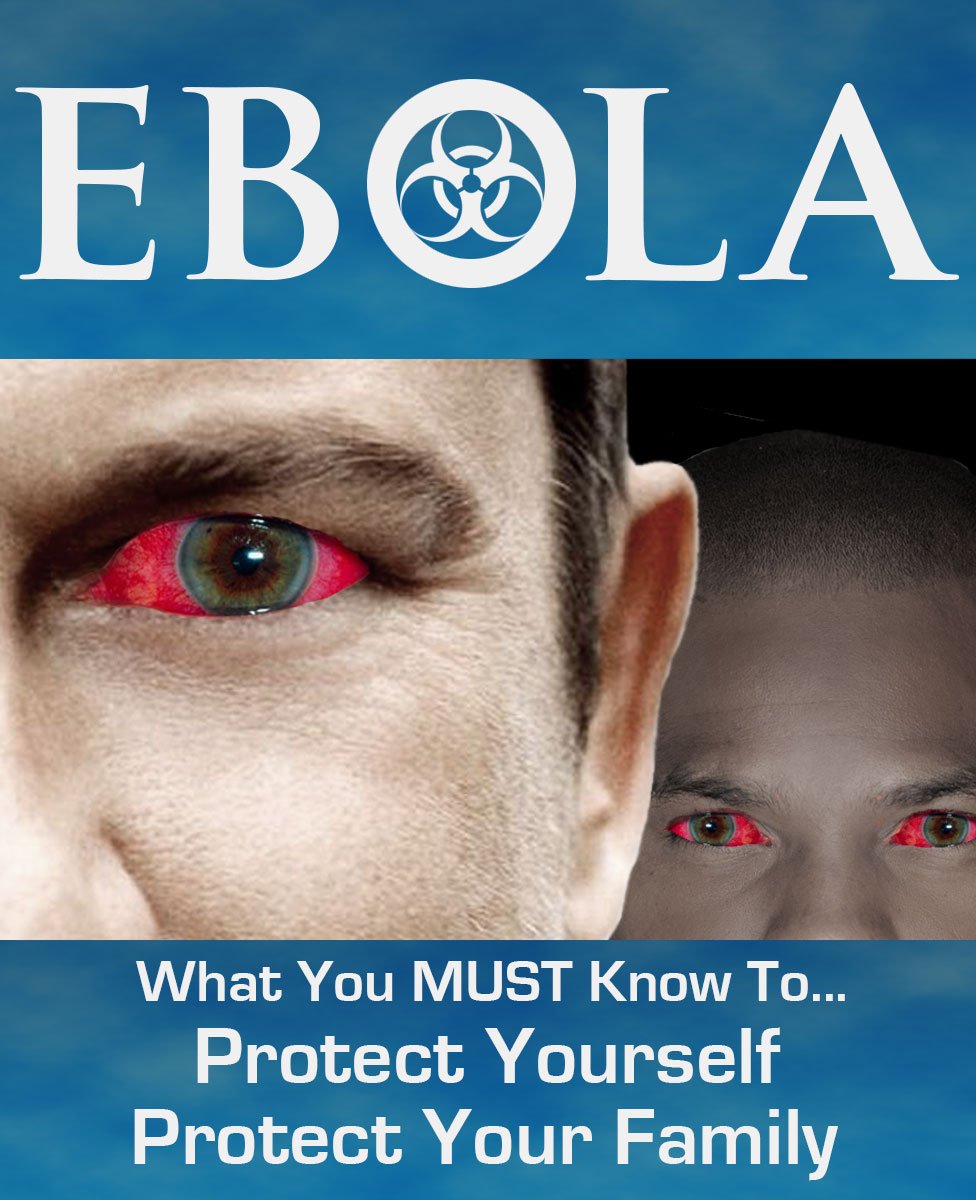
If you’re looking for information about the deadly Ebola virus, you’ve found the only resource you need.
 Not just hype
Recommend
Not just hype
Recommend
I definitely recommend this guide to everyone. The writer makes a great case for why Ebola could be the next major pandemic and I’ll tell you right now that it is scary. It’s very scary to think and I hope that it doesn’t happen but it’s better to be safe than sorry as the saying goes.
Easy to read
 Two Thumbs Up From a Nurse
This book is different, it is not just a book about the origins of the virus or just the basic facts, but a set of instructions dealing with how to avoid and treat the virus based on the current available information. Ebola is a very dangerous virus unlike anything we have seen in the past four or five decades. Its level of danger is much higher than that of Covid because it kills so many who become infected. The symptoms of Ebola are also much more severe. Although I found some of the details concerning actual patient care a bit lacking (mostly because I’m a very nitpicky nurse), overall this is an excellent resource. I would actually go so far as to say this is required reading if you’re serious about being prepared for an Ebola pandemic. This information would also serve you well if something other than Ebola comes along in the future.
very informative book
Here you will find every bit of info about Ebola:
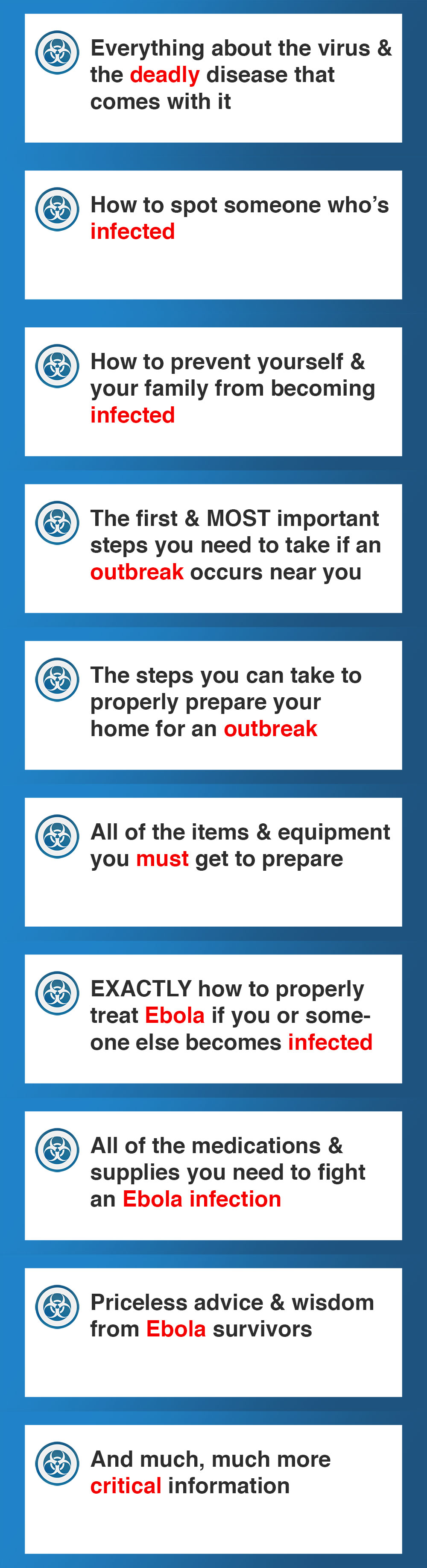
- Everything you need to know about the current set of outbreaks
- How to spot someone who’s infected
- How to avoid becoming infected yourself
- What to do if someone you know becomes infected
—and all of the other critical information you need to know.
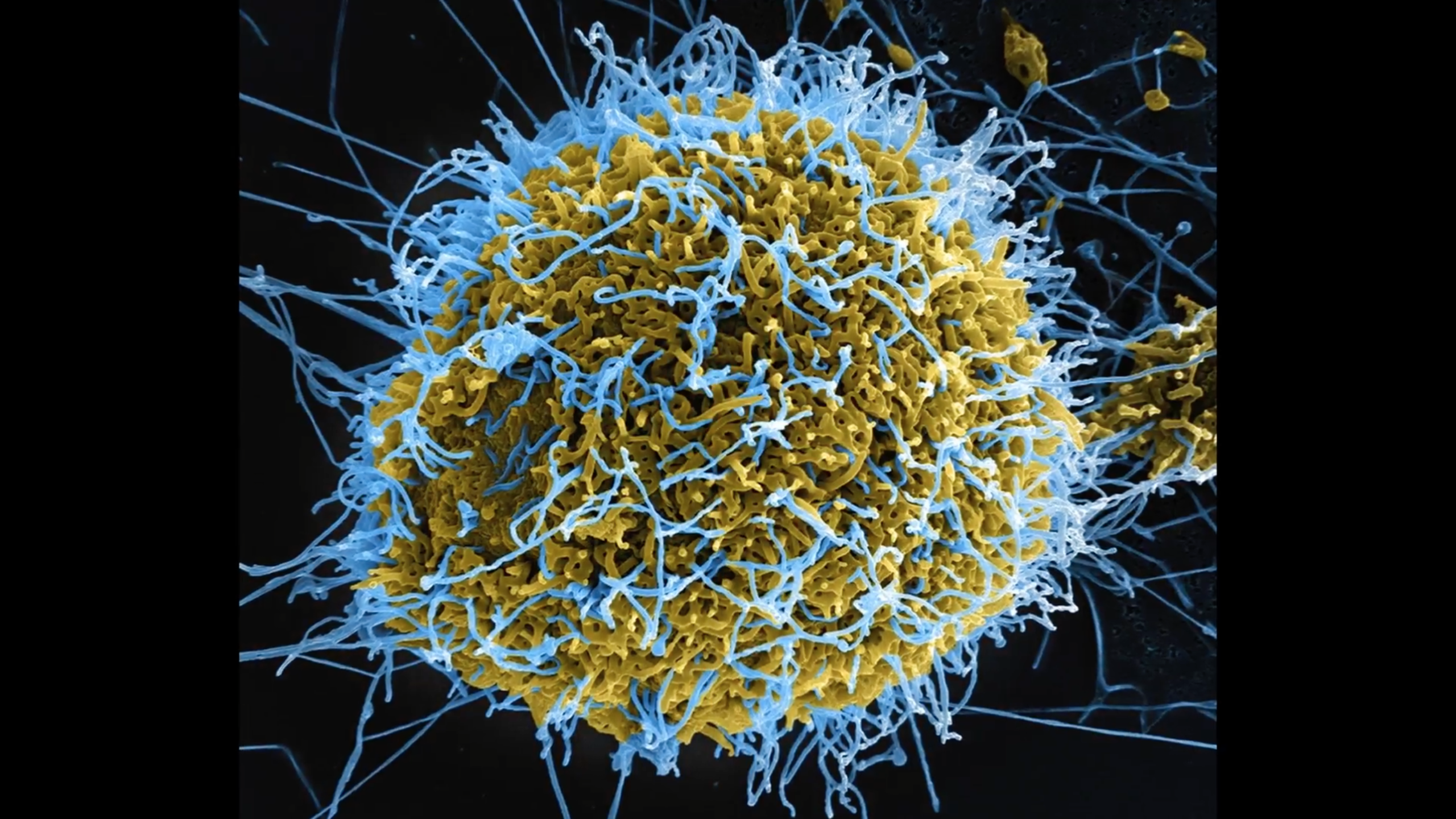
And, most importantly, you won’t have to worry about conflicting information like you will find on the websites of the major health organizations.
I will show actual examples of that conflicting information farther down on this page.
So, I first heard about Ebola back in the very early 2010s, probably around 2011 and I became really interested in researching it, mostly because of how deadly the disease is.
Ebola is nothing to play around with because if you become infected, as many other cases have shown, you only have around a 40% - 50% chance of surviving and recovering.
But sometimes that number can go all the way down to around 10%, meaning you have around a 90% chance of dying if you don’t receive proper treatment.
That’s why it’s so important to know everything about the virus and how to NOT find yourself dealing with an infection.
Back when I first heard of Ebola I knew of coronaviruses but I didn’t know much about them, in fact I really only knew that term — coronavirus.
But Ebola is much, much more severe than coronavirus. As you probably know, while covid can cause death in certain cases, the majority of people will recover from a covid infection, and it isn’t uncommon for people to not even know they have covid.
Again, this is not the case with Ebola which is very, very contagious.
In fact, you can become infected with Ebola even if you have just a single strand of the virus on your finger.
And once you become infected it is critical that you know exactly what to do and how to treat the infection.
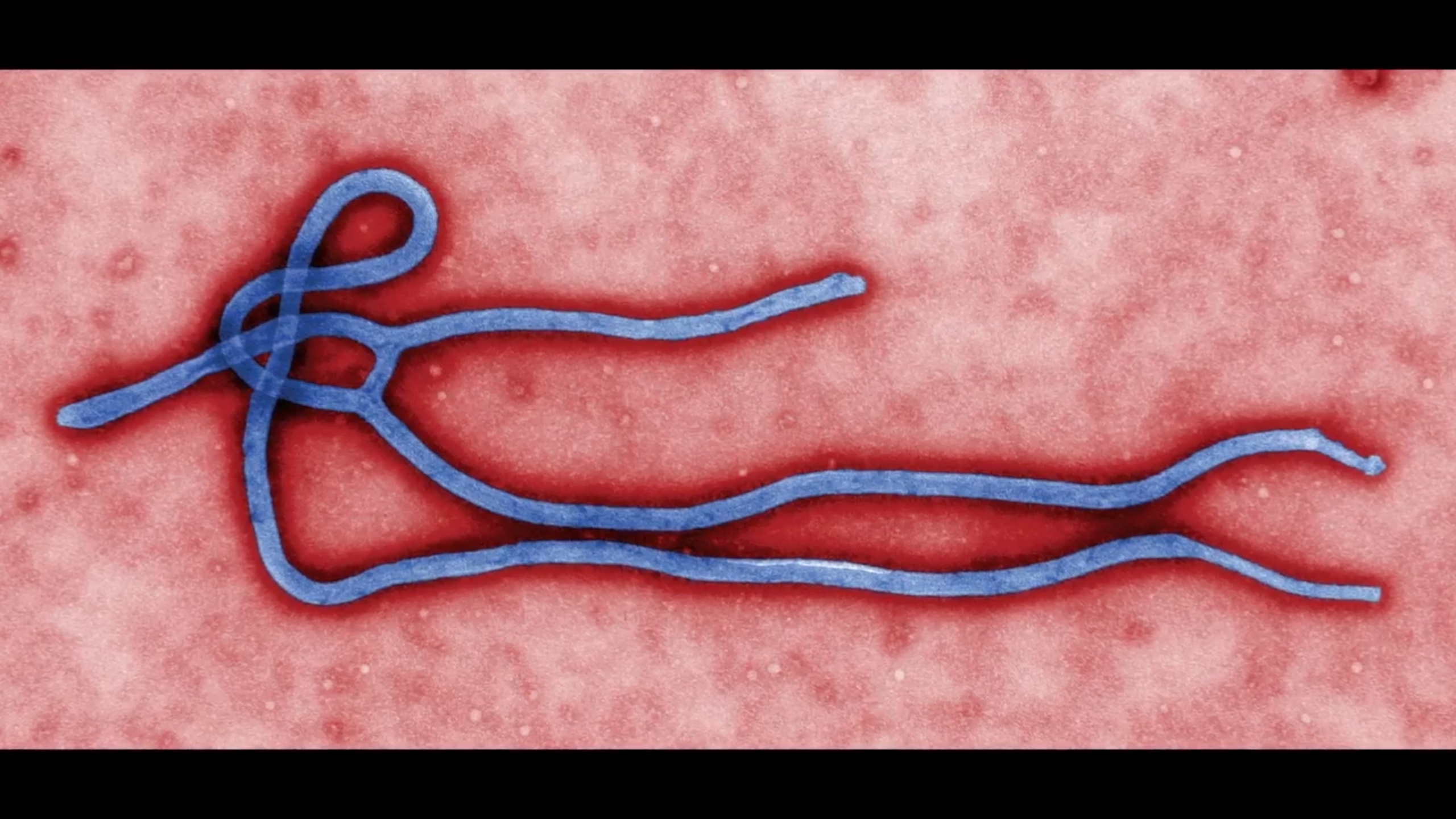
One of the main problems with Ebola is that early symptoms can be very hard to detect, because they can be very mild.
So, once the Ebola infection is confirmed it is critical that you get the proper treatment or there’s a good chance you will not make it.
Again, in many cases Ebola can have a fatality rate of 90% or higher if proper treatment is not administered.
But here’s the thing—right now as you’re watching this, there are only a handful of hospitals in the United States—approximately 50—that have specialized centers designed to treat Ebola patients.
And if that wasn’t bad enough, soon some of those treatment centers could basically be shut down because of lack of funding, which has already started to happen.
Treating someone with Ebola is a very dangerous and time-consuming process. You need proper protective gear and a proper space to do it.
And you need to know this information because if there is a full-on Ebola outbreak, which is a very real possibility that could happen, you’re not going to be able to simply go to your nearest hospital.
Most people think that when they get sick they can simply go to a doctor, or that if they have a medical emergency they can simply go to the hospital for treatment.
Under normal circumstances both of those scenarios are likely to be true.
But pandemics, serious pandemics, are not normal circumstances, so here’s the question:
What would you do if you or your family went to a hospital and saw it overflowing with people?
And not just people, but sick, infected people carrying the deadly Ebola virus?
As other past outbreaks have shown us, it usually takes just 24 hours for hospitals to become full with patients.
And in many of these cases some people don’t survive because there simply aren’t enough trained doctors and nurses to properly take care of them.
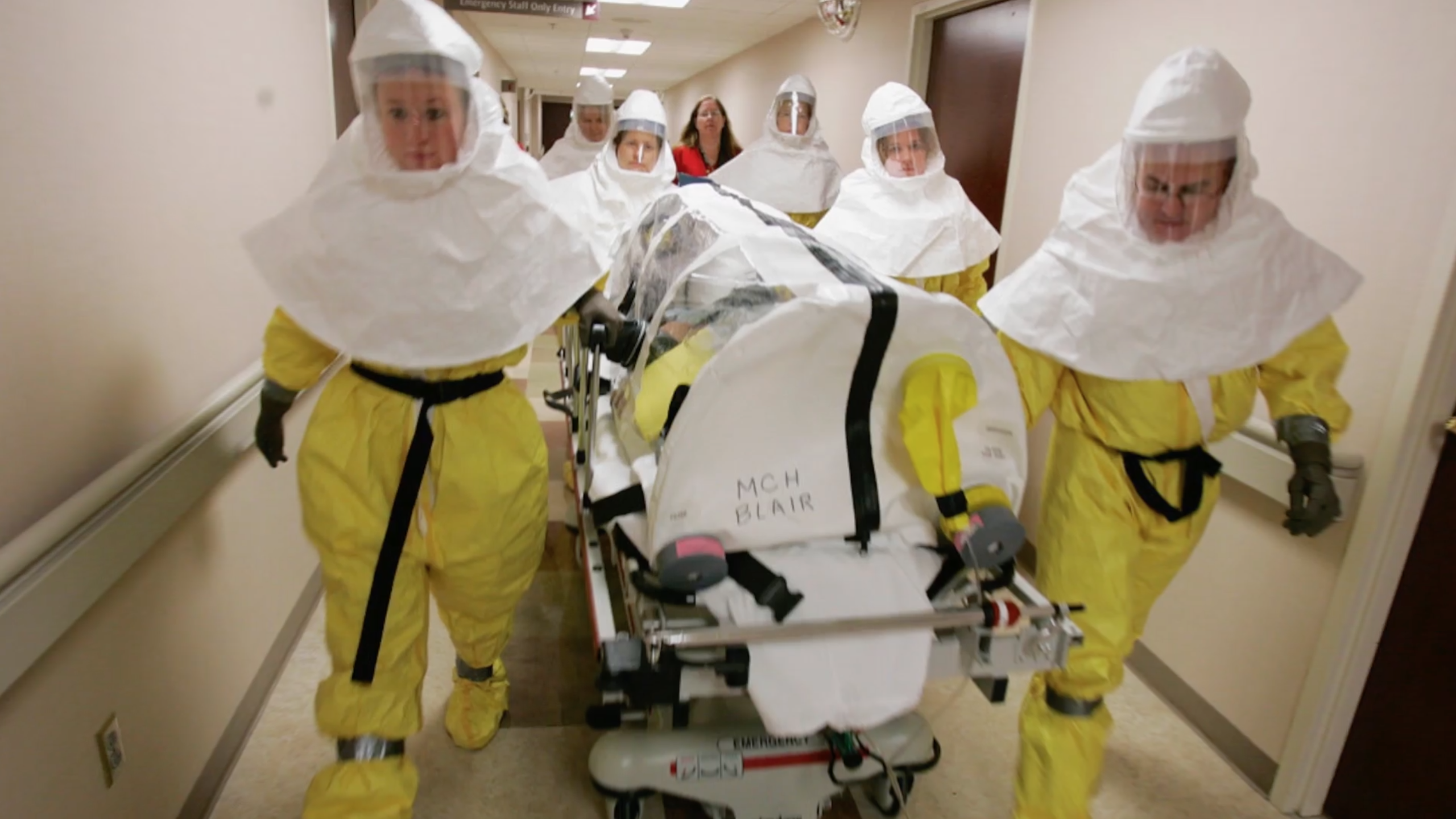
The fact is, our healthcare systems are nowhere near prepared for Ebola, much less a full-on outbreak of the virus.
And all of this that I’m saying, this is not just some outlandish sensationalism like you will find on most “news” outlets.
These are cold, hard facts that CANNOT be argued.
No matter how many “experts” from the CDC, or the World Health Organization, or other health organizations try to downplay Ebola outbreaks, Ebola remains a major threat.
In fact, trying to downplay the seriousness of Ebola is exactly what they did back in 2014 when those major outbreaks first happened.
And here I’m going to give you a perfect example using a direct quote from the World Health Organization:
On April 1, 2014 when a medical group that had been working directly with Ebola patients (Medecins Sans Frontieres) released statements warning that the spread of the Ebola epidemic was “unprecedented”, what did the World Health Organization do?
They sent out a spokesperson to tell the public —
the very people they claim they are always trying to keep healthy and safe!
— that the Ebola epidemic was still “relatively small.”
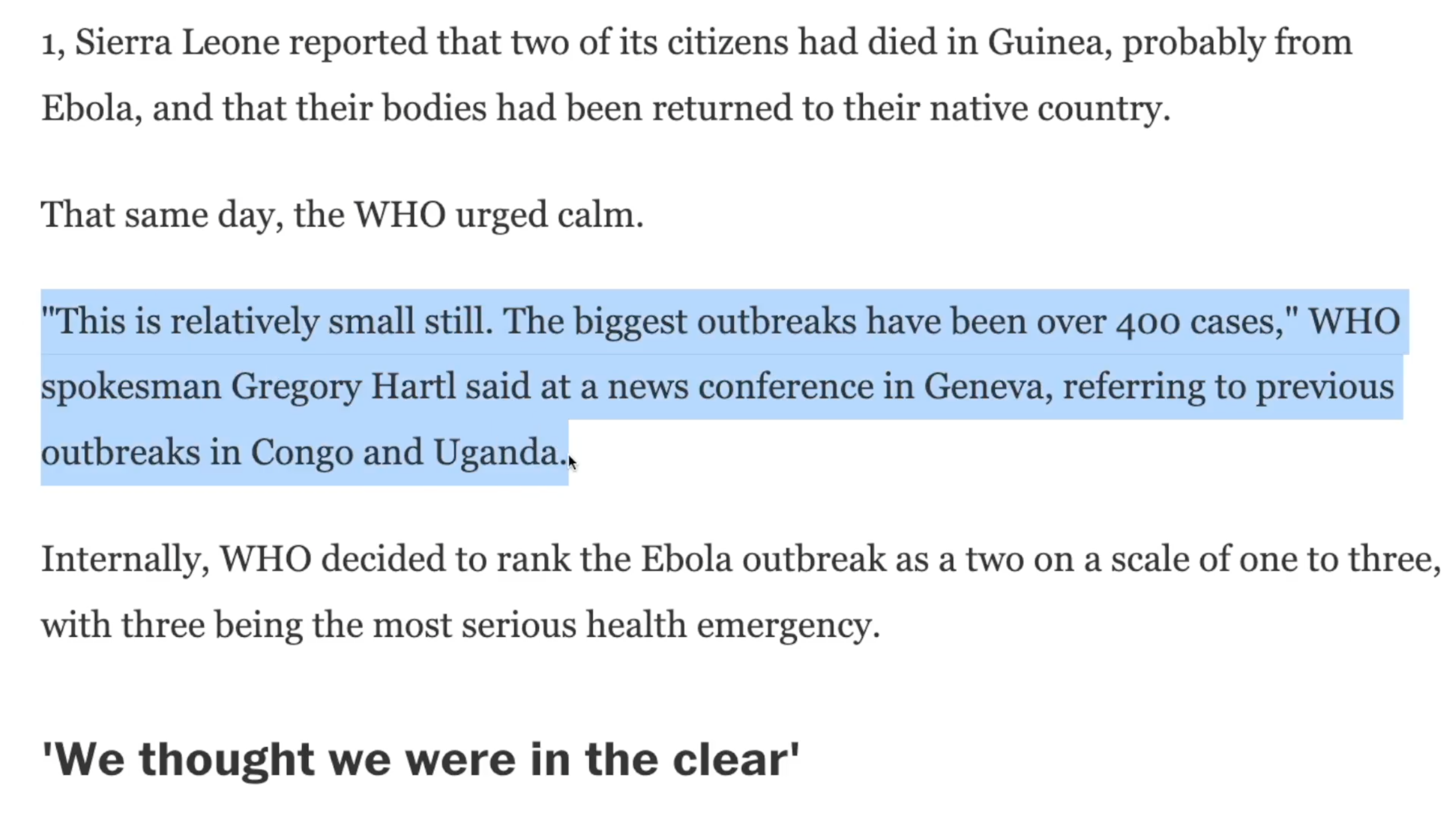
And then — just 6 months later — there had already been thousands and thousands of deaths caused by the Ebola virus.
Now, I’m not trying to just badmouth these health organizations, my point is that they consistently “make mistakes”, and that can be shown and proven over and over again.
And no matter how hard they will try to downplay an Ebola outbreak, you have to understand that if that happens, even a very small outbreak can turn into a major health crisis in a matter of weeks if not days.
Not including covid, more recent examples of serious global pandemics include the Asian Flu and the Hong Kong Flu.
The Asian Flu lasted from 1957 to 1958, and was first identified in China.
By June of 1957, the disease had made its way to the United States, causing approximately 70,000 deaths.
When it was over, around one million people throughout the world were dead.
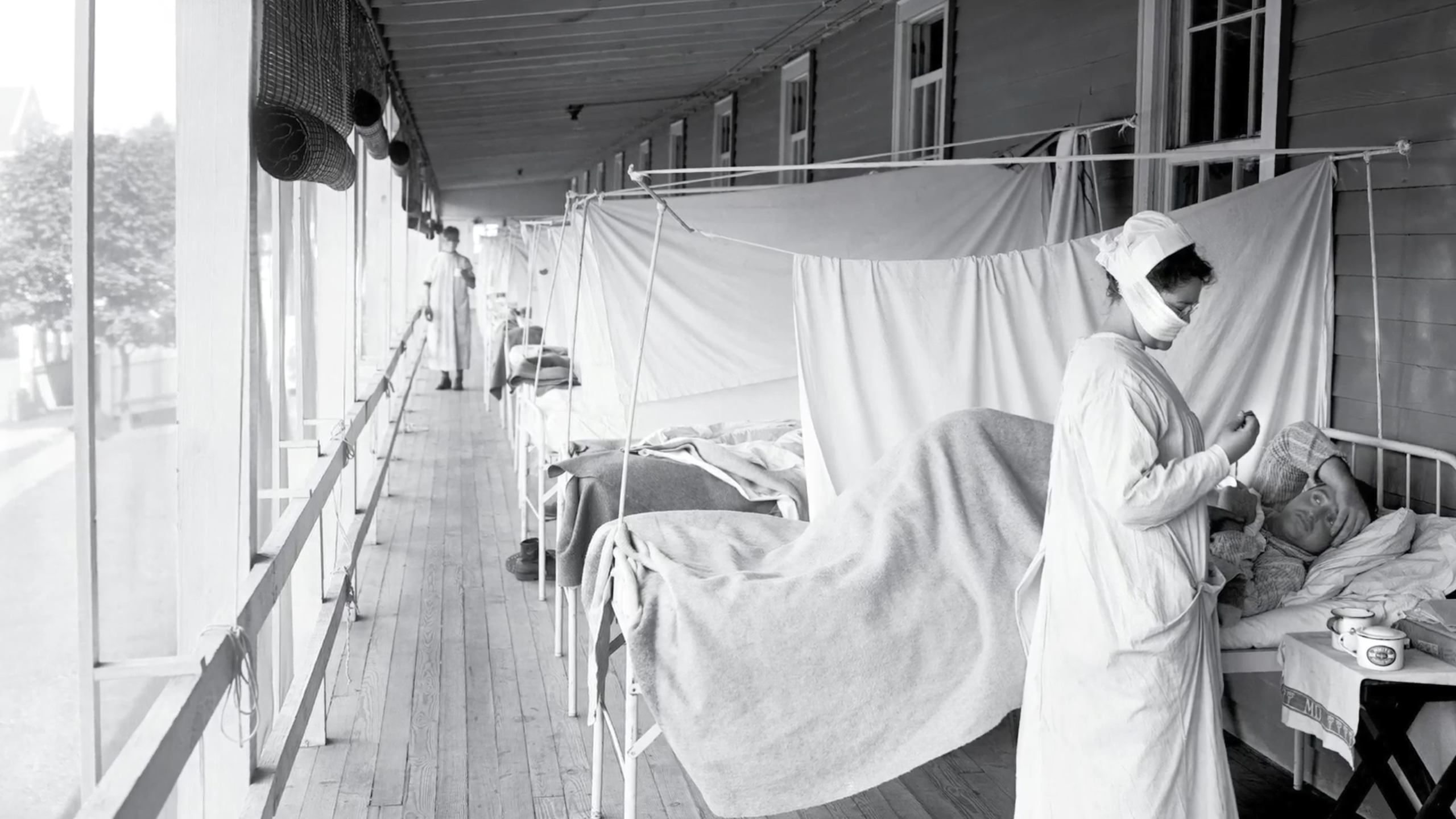
The Hong Kong Flu pandemic took place from 1968 until 1969, causing around 34,000 deaths in the United States alone.
The first infections were reported in Hong Kong before spreading to other parts of the world.
And although the exact death toll is unknown, it is thought that the Hong Kong Flu virus claimed the lives of one million to upwards of four million people.
The virus strains responsible for that pandemic are still around to this day.
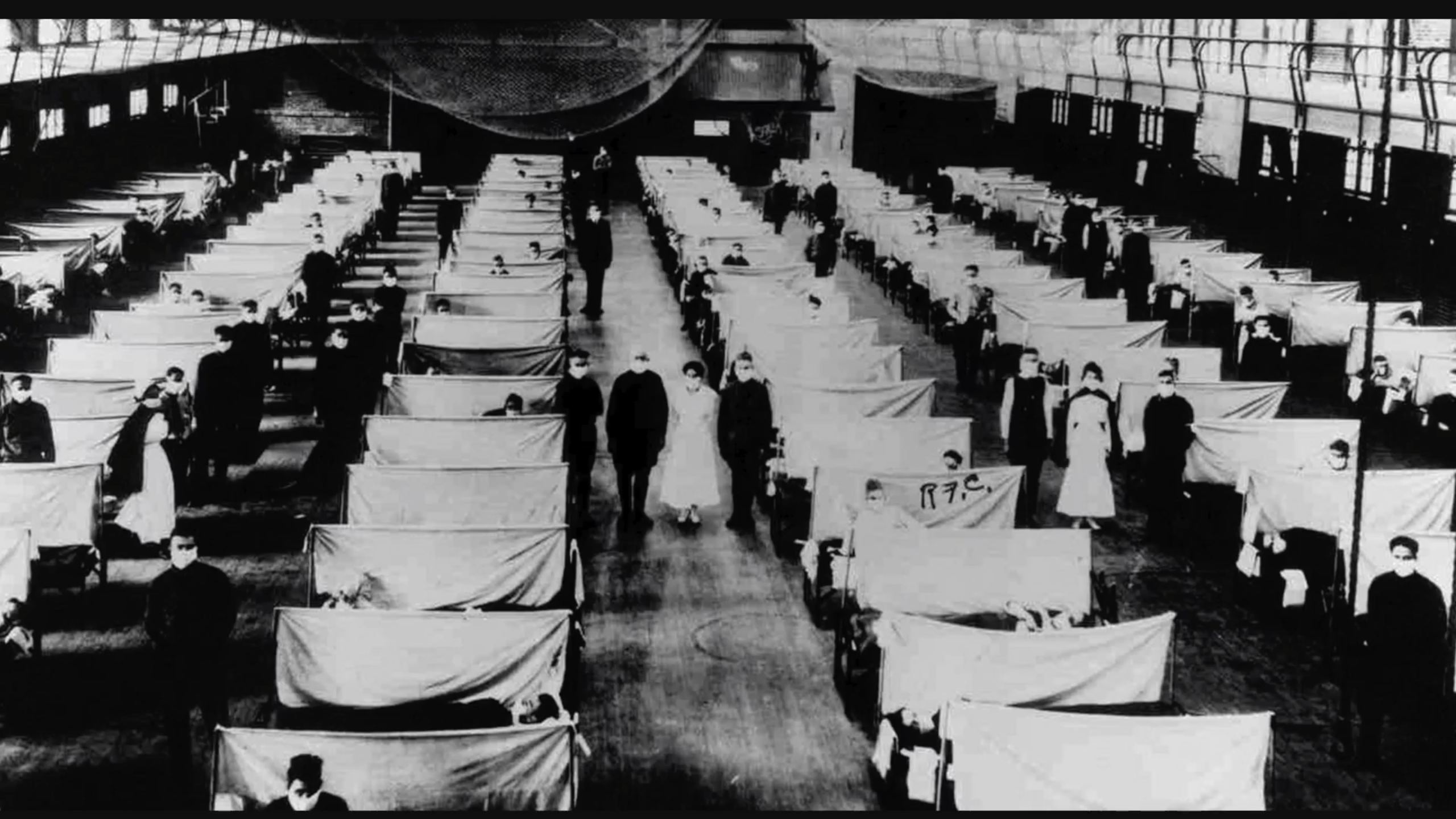
As horrible as those pandemics were, neither come close to the pandemic brought on by the Spanish Flu, which was a virus that was identified in March of 1918 in Kansas.
By October of the same year, it had spread to every continent, decimating the world’s population, infecting around 500 million people, and killing anywhere from 50 million to 100 million people.
Approximately 700,000 of those people were in the United States.
And think about this:
That deadly Spanish Flu pandemic happened BEFORE we had modern air travel...
Covid showed us just how crazy things can become, and it also showed us how quickly the world can change.
It also gave us a very clear picture of how our governments all over the world essentially failed us, the common citizens.
And again, covid is nothing, NOTHING compared to Ebola.
Most people who get covid have a 99% chance of recovering.
There are exceptions, but in most cases only people with major underlying health problems don’t recover.
But even if you’re one of the healthiest people on the planet, if you get Ebola you only have a 40% - 50% chance of recovering and not dying, while for children and the elderly the risk of dying is even greater.
That's why it’s very important that you understand how deadly Ebola is and how to prepare in case there is an outbreak.
And just to be very clear, there are Ebola outbreaks all the time, it’s just that they are mostly in very rural areas and they haven’t reached YOUR area yet.
But, all it takes is one mistake — for example, someone getting on a plane while sick even if they don’t yet know it — for the virus to begin to spread.
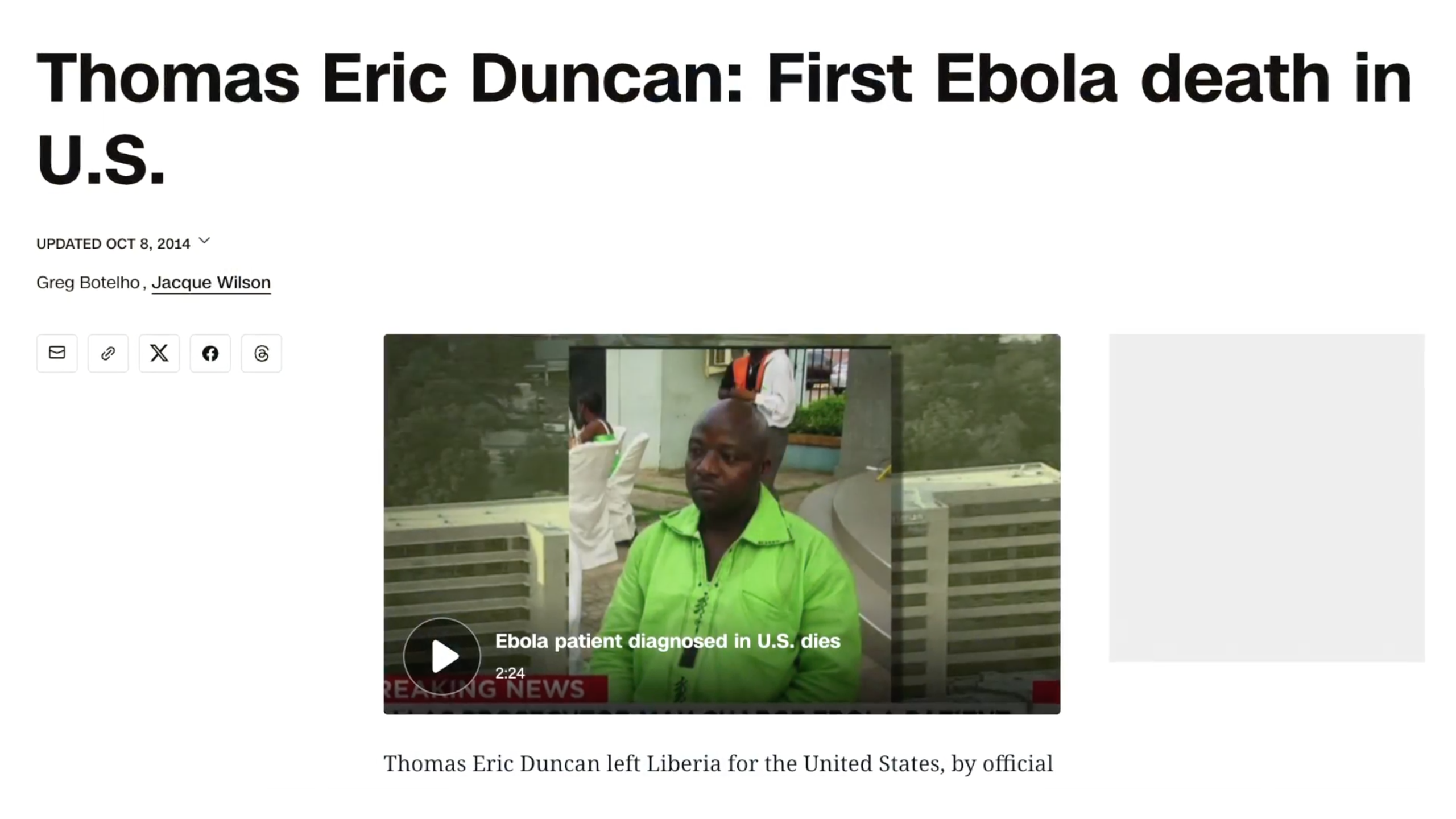
The first person to die from the disease in the United States was a man named Thomas Eric Duncan, and here is how quickly that happened:
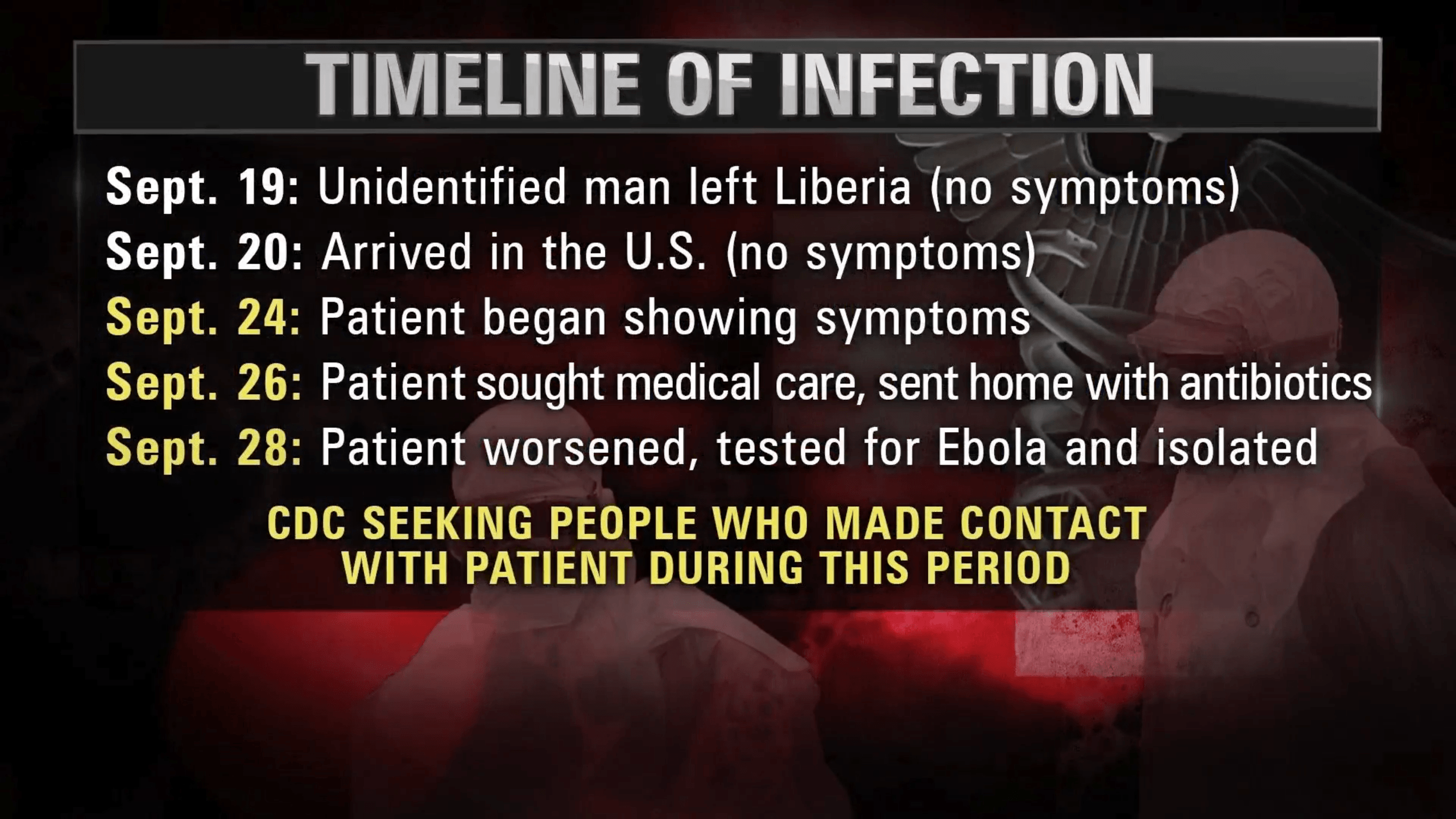
- On September 20, 2014 Thomas Eric Duncan arrives in Dallas. Duncan had previously tried to help a woman infected with Ebola in Liberia.
- On September 25, Duncan travels to a Dallas hospital after experiencing a high fever and abdominal pain. The medical staff release him, even though he told members of the medical staff that he had recently been in — and traveled from — West Africa.
- On September 28, Duncan is transported by ambulance to the same Dallas hospital he had originally been released from. Two days later, the CDC confirms that Duncan is infected with Ebola, and he becomes the first person diagnosed with the virus in the United States.
- Only four days later, Nina Pham, a nurse who treated Duncan was also quarantined for carrying the Ebola virus.
On October 8, unfortunately Thomas Eric Duncan dies in the hospital in Dallas from Ebola.
And what’s very ironic, and also very scary when you get right down to it, is a lot of the people who are traveling back and forth and who are getting infected, are doctors and nurses who are working around the world trying to stop people from dying from this deadly disease.
Other than the fact that the disease is so infectious, one of the reasons Ebola spreads so easily is because early symptoms can resemble those of many other illnesses, including the flu or even a common cold.
In Africa, malaria is a very common disease, and the early symptoms of malaria are also very similar to the early symptoms of Ebola, which causes many healthcare workers to become infected before they have time to properly protect themselves from their patients.
The first signs of an Ebola infection usually begin suddenly and without warning five to ten days after the initial contact with the virus, although the virus can live for longer periods in a host’s body without causing any signs or symptoms to show.
For example, the virus has been known to live for up to three months in the semen of male hosts.
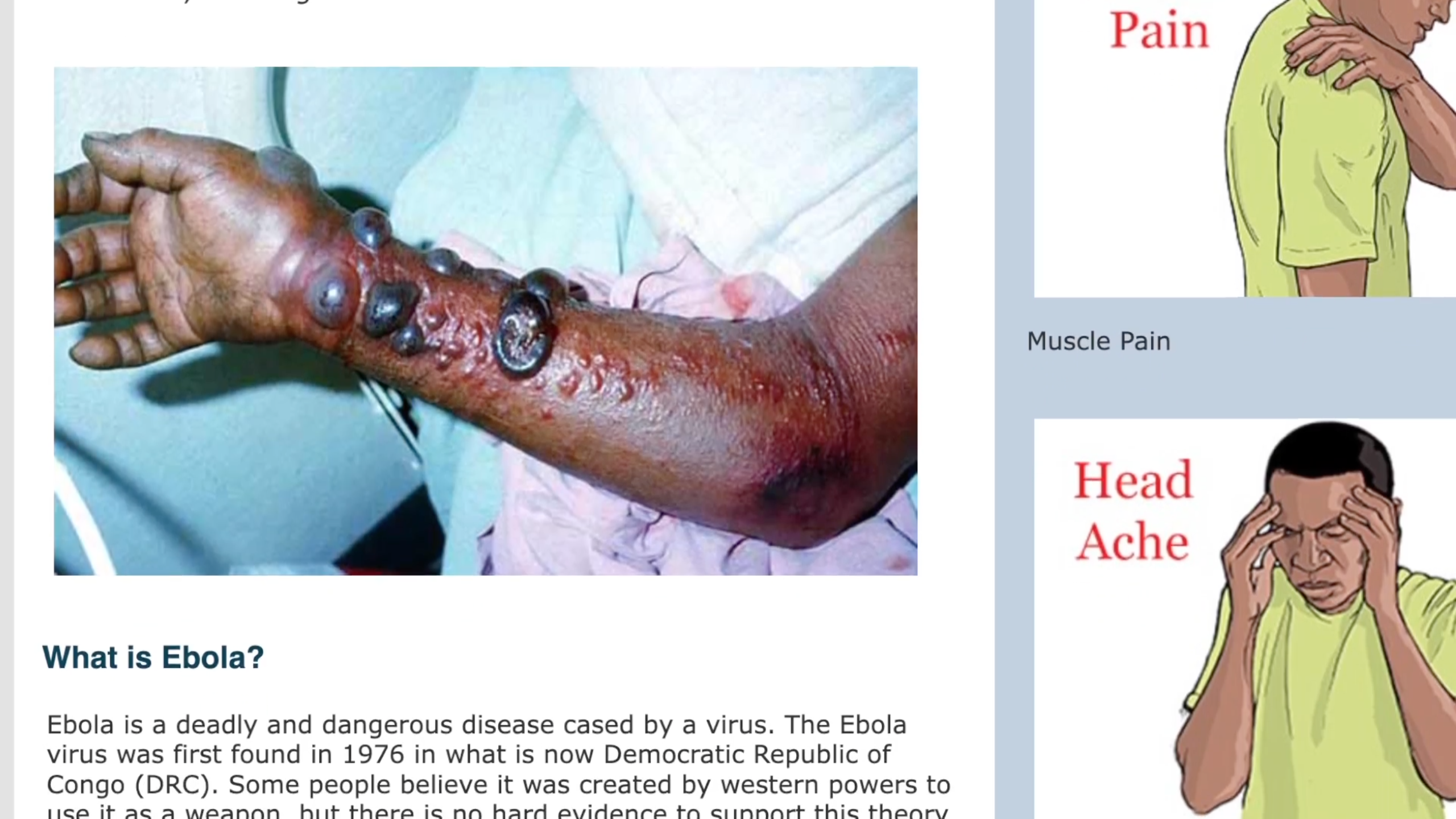
The first symptoms of an infection are usually a fever or a severe headache followed by body aches in the joints and muscles, chills, and overall weakness.
As the virus overtakes the host in the days that follow, more severe symptoms usually appear, including vomiting, diarrhea, stomach pains, and chest pains accompanied by painful coughing.
People in the advanced stages of the disease might also have rashes on their skin, severely bloodshot eyes, and be prone to bleeding.
Bleeding internally is common, as is external bleeding from orifices of the body such as the nose, ears, and rectum.
It’s important to understand that right now there is no cure and there is no totally effective vaccine for the Ebola virus.
The purpose of this website and this information isn’t to be all doom and gloom and try to freak you out, the purpose is to open your eyes to a very real threat that could very easily affect not only you and me, but all the people you care about.
Every single time some catastrophe happens, no matter the source — whether it’s a natural disaster, a viral pandemic, or whatever — most people wait and try to prepare AFTER the event has already started.
If you’ve ever been to a grocery store the day severe weather is announced, I’m sure you’ve seen the empty shelves where the bread and milk are usually stocked.
Many people don’t even know what to buy, but many others do, and I guarantee that if you wait until the storm has already hit, you’ll find yourself without an umbrella and nothing but empty umbrella shelves at your local stores.
We see this all the time with generators, gas cans, candles, and even toilet paper.
The day before an event is announced, the stores are full of these items.
The day after the event has already passed, the shelves are empty, and the stores are full of people walking around looking for those exact supplies.
Again, that’s why it’s so important to prepare now, not later but now.
And again, if you think this is all just a bunch of sensationalistic bullshit or fear-mongering, even after the chaos so many other deadly pandemics have caused, you really need to wake up and wake up now.
Because Ebola is a very real thing and it’s a very real threat that could spread at any moment.
Just because you haven’t personally seen Ebola and the extreme sickness and death it brings, doesn’t mean it can’t find its way to your part of the world, or even right next door to your home.
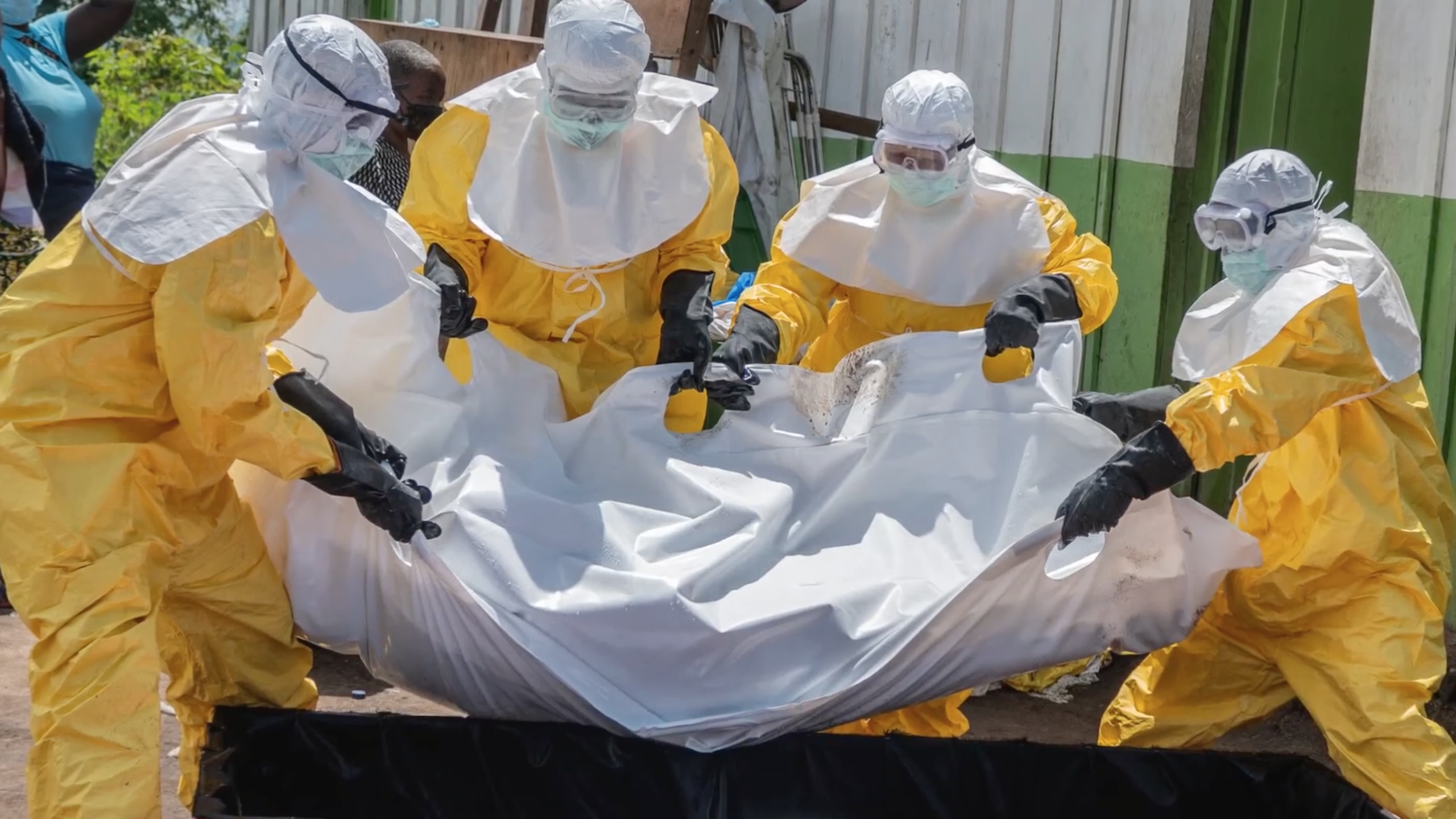
You can survive Ebola and you can help others to survive Ebola IF you know exactly how to do it.
Now, obviously there’s way too much detailed information that you need to know when it comes to avoiding and fighting this deadly disease, I can’t fit everything into one page on a website so that is why the Ebola Survival Guide was created.
Worth Having
Essential Info
What I was looking for
Good info
Very powerful
The reason the author is being so serious in this book is because this is such a serious disease. Think about this: If you get Ebola there is a 50% chance you will die. And that’s in THIS modern time right now. Even with all of our modern medicine in 2018 there is still no cure or vaccine for Ebola. I’ve never heard of another virus this serious with that kind of death rate.
As far as the actual info about Ebola, the author does a great job describing all of the details about how it would ravage our infrastructure and hospitals. I double checked his information and he is absolutely right. Even now, 4 years after the massive outbreaks back in 2014 we are simply not prepared for a major Ebola outbreak. We simply don’t have the needed hospitals or the staff to run them.
He then goes into detail about the actual disease and how to spot someone with an infection. Some of the early symptoms of Ebola are very common so it can be difficult to spot, but as the disease progresses it will eventually become much, much worse. Ebola will most likely kill you if you don’t know how to treat it. The people who have survived only did so because they received the right medicines and proper treatment from healthcare workers and doctors. That’s where the main part of this book comes in, which is every step on how to treat yourself but also how to treat someone else with Ebola if you ever had to.
This is actually a great resource and you better hope you have a copy if an Ebola outbreak ever occurs because I believe the author is right, if that happens there will be pandemonium like we’ve never seen.
Unlike other “books” and “guides” you will find online, this isn’t just a bunch of copy and pasted articles pulled from the internet.
This is a full-on, highly-researched and very detailed guide that will tell you everything you need to know about Ebola and how to fight it.
There is no other comprehensive guide about this disease that even comes close to the Ebola Survival Guide.
I know that because I’ve read the handful of “books” that are out there and I saw first-hand how worthless they are.
That’s one of the main reasons so much time was spent making this guide.
There are already outbreaks going on and Ebola has already killed tens of thousands of people.
Just because we — you and I — haven’t seen it firsthand yet, doesn’t mean anything. It is a very real threat that could be here at any moment.
And again, it’s very, very important to understand that.
The Ebola Survival Guide covers every single detail about the Ebola virus, including:
- Everything we know so far about the virus and the deadly disease that comes with it
- How to spot someone who’s infected
- How to keep yourself and your family safe so you don’t become infected yourselves
- The first, most important steps you need to take if an outbreak occurs near you
- The simple steps you can take to properly prepare your home to deal with an outbreak
It also includes detailed instructions on how to build a proper Ebola treatment space in your own home.
Remember, the hospitals will not be an option even if there is a moderate outbreak. There will simply be way too many people that are going to need treatment.
The guide details all of the equipment and items you need to get right now to prepare — and these don’t cost a lot of money and remember, don’t be that person aimlessly wondering around the stores AFTER the storm has already hit.
With this information you will know how to properly treat Ebola if you or someone else becomes infected
You will have an exact list of all medications and other supplies you can get right now that will help you not only fight but actually BEAT an Ebola infection.
And a lot more critical information.
You will also have the priceless words of wisdom from others who have survived an Ebola infection themselves.
Great book
Better to prepare now
Good Source Of Info
 I like the content but it should have more pictures
Not just for Ebola
I like the content but it should have more pictures
Not just for Ebola
These methods and items can help you survive a multitude of pandemics, should they arise in the future.
You know, with our crazy world getting crazier every day it seems like —
different groups of people fighting, rioting, and looting, and viral outbreaks and diseases continuing to mutate and find new ways to infect us
— the one thing we can do is make sure we are prepared.
So, it’s up to you if you want to prepare now.
Or… don’t.
Don’t prepare and then find yourself clueless about one of the most deadly diseases in the middle of another — but much more serious and devastating — worldwide pandemic.
And all of the info in this guide, you’re not going to find all of this anywhere else.
If you think you can just “go find it online” when you need all of this critical information in the middle of a deadly outbreak, let me show you something:
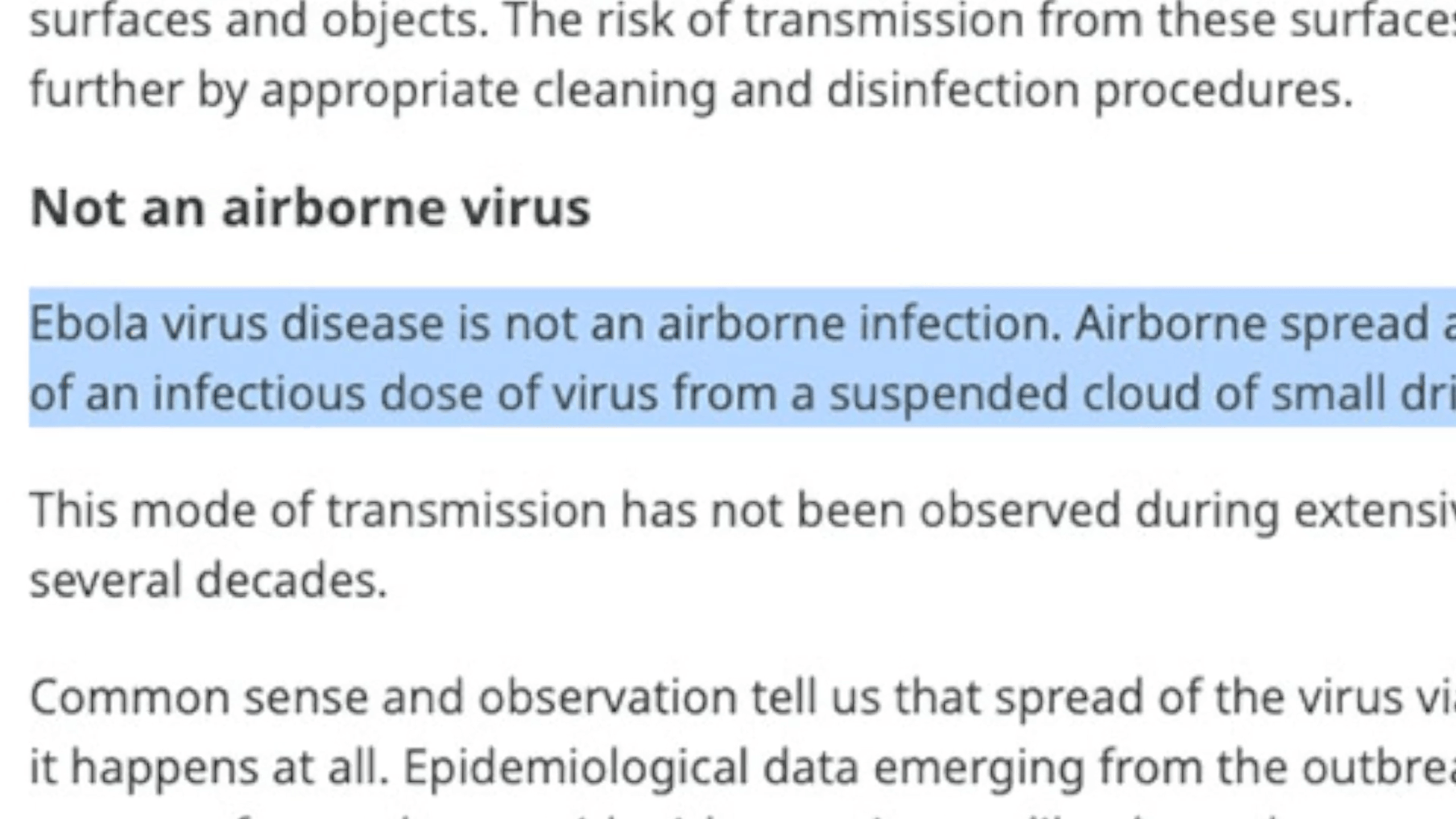
Right now you can go to the World Health Organization’s website and read right there on their webpage that “Ebola is not an airborne infection.”
You can then head right on over to the National Library of Medicine website and read that the “Ebola virus is classified as a biological agent capable of aerosol transmission.”
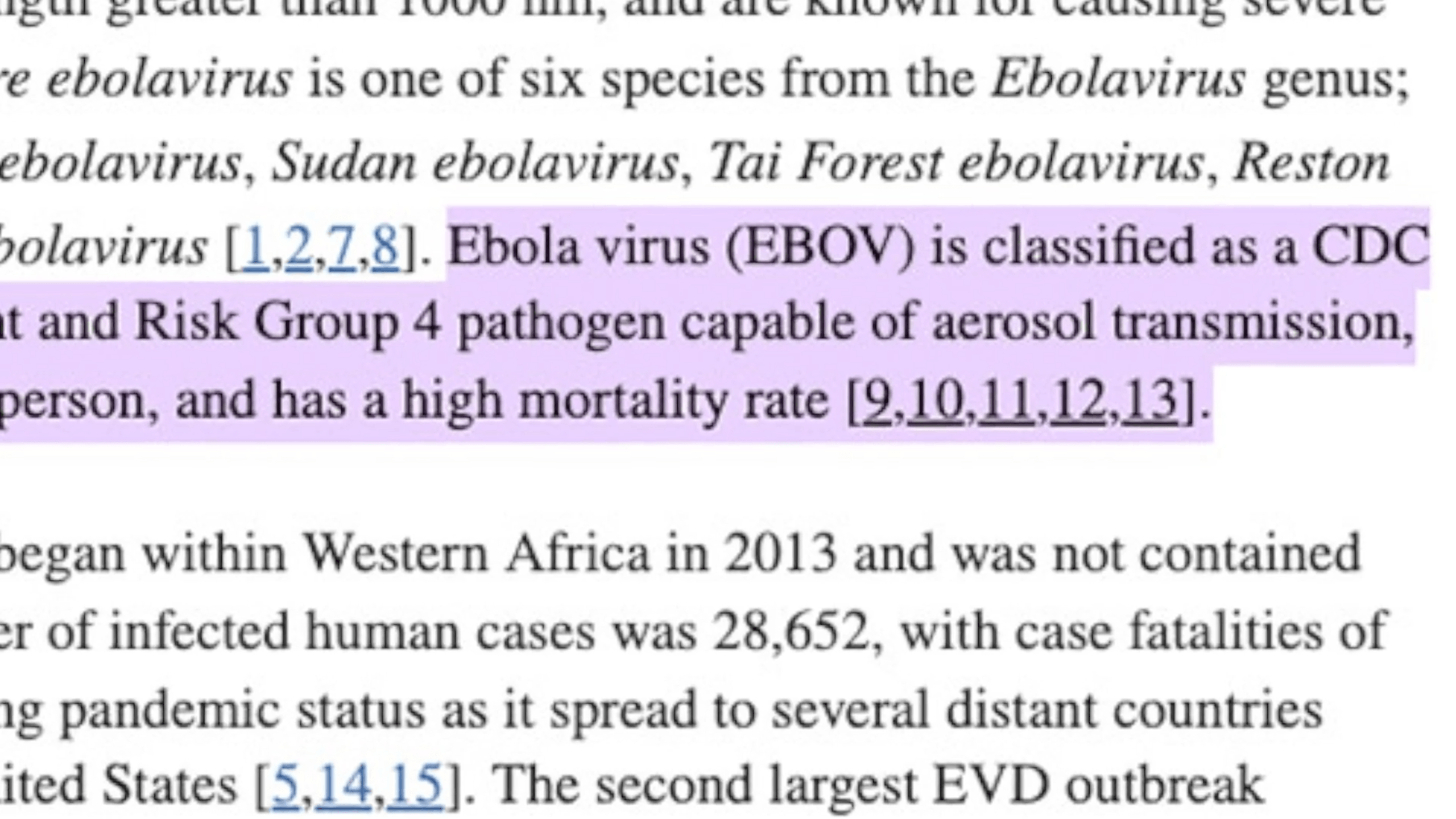
And while some of these so-called “experts” will argue that the terms “airborne” and “aerosol” have different meanings and applications and are not the same thing, it’s obviously far more important to be aware that there is a chance that you can be infected with the Ebola virus by inhaling particles in the air.
Arguing semantics while claiming that the virus “is not an airborne disease” is not only very misleading, it is also very dangerous and potentially deadly “information”.
And this is the World Health Organization and the National Library of Medicine we’re talking about, this is not just some no-name moron posting nonsense on some random forum!
No, this is directly from our so-called “experts”. And they can’t even agree whether or not the Ebola virus can be transmitted through the air!
That’s the kind of contradicting information you will find if you start hopping around to random websites trying to find all of the detailed information that’s already in this guide.
You simply won’t find it…
and can’t find even the most basic stuff they need at any of the stores because everything has already been wiped out
— you’re going to find yourself in the middle of an extremely deadly pandemic unprepared and with no one to turn to.
So, it’s up to you and all of the rest of us to take care of ourselves.
Again, there is no magical cure for Ebola.
So, don’t find yourself unprepared.
Order a copy of the Ebola Survival Guide. Your life or someone you care about — your spouse, your child, parent, friend — your life and their lives might just depend on it one day in the very near future.
Good
Good book
 Ebola pandemic??
If you think Covid was bad
Everyone should read this
pretty good read
Ebola is freaking SCARY
Don’t just rely on the “news”..
Five Stars
Just the facts
Detailed
Not what i expected
A lot of info for the price
Really good info.
Better book.
Excellent Book
As described.
Not boring!
Disturbing…
The best book I found
Ebola pandemic??
If you think Covid was bad
Everyone should read this
pretty good read
Ebola is freaking SCARY
Don’t just rely on the “news”..
Five Stars
Just the facts
Detailed
Not what i expected
A lot of info for the price
Really good info.
Better book.
Excellent Book
As described.
Not boring!
Disturbing…
The best book I found
This is a very detailed book about how to actually avoid getting ebola and how to actually treat someone (or yourself) if you ever had to do that. The chapter about how few hospitals there are (only 4, yes 4 total hospitals in the U.S.) that actually have ebola treatment centers was pretty insane. This book also has a lengthy timeline that goes through each phase of the current outbreaks and how quickly everything got out of hand. It’s safe to say that any government is the last thing you should be relying on in situations like this.
Overall I do recommend this book if you are looking for good, detailed information about the virus and how you can protect yourself from it.